

“`html
Circumferential Liposuction and Abdominoplasty: An Introduction to Comprehensive Body Contouring
Comprehensive body contouring represents an advanced approach in modern plastic surgery aimed at simultaneously removing localized fat deposits, eliminating excess skin, and restoring lost volume. Combining key procedures such as liposuction, fat grafting, and abdominoplasty makes it possible to achieve more than localized reductions in body measurements. These techniques can improve overall body proportions and create a more harmonious, balanced silhouette.
The need for combined procedures most often arises after pregnancy and childbirth, significant and rapid weight loss, or age-related tissue changes. Many patients find that even regular exercise and a balanced diet are insufficient to eliminate stubborn fat deposits or loose, hanging abdominal skin. Each procedure addresses a specific anatomical concern, and the combination is selected individually based on the patient’s overall health, body structure, and aesthetic goals.
In modern aesthetic medicine, a comprehensive approach is becoming an increasingly popular option for patients who wish to achieve significant changes through a single surgical session and undergo one recovery period rather than multiple operations and separate episodes of anesthesia. However, combining procedures is appropriate only when it is considered safe for the individual patient.
The Philosophy of Comprehensive Body Contouring
The primary goal of a comprehensive approach is to achieve aesthetic balance and proportionality. Performing procedures individually does not always produce the desired outcome. For example, removing excess abdominal skin alone will not improve the shape of the hips or waist, while removing fat through liposuction when skin elasticity is reduced may make sagging more noticeable.
- Liposuction removes excess localized fat deposits and reshapes body contours.
- Fat grafting allows the patient’s own fat to be transferred to areas that require additional volume, such as the buttocks or breasts.
- Abdominoplasty removes excess skin and can tighten the muscular and fascial structures of the anterior abdominal wall when indicated.
Integrating these techniques into a single surgical plan requires considerable surgical expertise, careful calculation of the extent of the procedures, and strict adherence to safety protocols. The surgeon must consider not only the technical aspects of surgery but also the natural contours of the body, tissue dynamics, and overall proportions.
Liposuction: Reshaping the Torso
Liposuction is a fundamental body contouring procedure designed to remove localized fat deposits that do not respond adequately to conservative methods. It is important to emphasize that liposuction is not a treatment for generalized obesity or a method of achieving substantial overall weight loss. Its primary purpose is to refine body contours and improve the silhouette.
Treatment Areas and the 360-Degree Approach
Depending on the patient’s individual anatomy, liposuction may target various areas, including the abdomen, flanks, lower back, back, thighs, inner knees, and arms. Circumferential, or 360-degree, liposuction of the torso has become increasingly popular. With this approach, the surgeon addresses the entire circumference of the torso, from the anterior abdominal wall to the lower back and areas around the shoulder blades.
This approach can create smoother transitions between anatomical areas, visually elongate the torso, emphasize the waistline, and improve the overall harmony of the figure when viewed from the front, side, and back.
Types and Technologies of Liposuction
Modern plastic surgery offers several techniques for removing excess adipose tissue:
- Tumescent (traditional) liposuction: A specialized tumescent solution, commonly known as Klein’s solution, is introduced into the treatment area to constrict blood vessels and prepare the fatty tissue for removal.
- Ultrasound-assisted liposuction (VASER): Ultrasound energy helps break down fat tissue before its removal. The suitability of this technique and its expected benefits are determined individually.
- Power-assisted liposuction (PAL): Cannulas with powered, oscillating movements allow the surgeon to remove fat with greater precision and control.
Features and Limitations of Liposuction
The success of liposuction depends partly on skin elasticity. When the skin has sufficient elasticity and the capacity to contract, it may adapt to the reduced volume of subcutaneous fat. However, when significant skin laxity, stretch marks, or sagging are present, liposuction alone may not be sufficient. In such cases, the surgeon may recommend combining it with a procedure that removes excess skin, such as abdominoplasty.
Fat Grafting: Natural Volume Restoration
Fat grafting, also known as autologous fat transfer, is a body contouring technique in which fat is harvested from areas where it is present in excess and transferred to areas that require additional volume or improved contour.
The Fat Grafting Process: Step by Step
- Fat harvesting (aspiration): Fat is collected using specialized cannulas. Common donor areas include the abdomen, flanks, and thighs.
- Purification and processing: The harvested fat is processed using an appropriate technique, such as centrifugation, washing, or decantation, to separate viable fat tissue from blood, residual anesthetic solution, and cellular debris.
- Layered injection (grafting): The prepared fat is injected in small amounts into the selected area using specialized cannulas. This technique helps create favorable conditions for graft survival.
Applications of Fat Grafting in Body Contouring
- Buttocks (BBL — Brazilian Butt Lift): Fat transfer can improve buttock shape and fill depressions along the outer hips. Fat grafting to the buttocks requires strict adherence to current safety standards.
- Breasts: Fat transfer may provide a modest increase in breast volume, correct certain asymmetries, or refine contours following implant-based surgery. The achievable result depends on the patient’s anatomy and the amount of fat that survives after transfer.
- Scars and contour irregularities: Fat grafting can help fill selected depressions associated with postoperative or traumatic scars and improve localized contour irregularities.
Using the patient’s own tissue reduces the risk of an allergic reaction to donor tissue. However, some of the transferred fat may be reabsorbed during the first few months after surgery. Fat graft survival varies from patient to patient and is taken into account when planning the procedure.
Abdominoplasty: Correction of the Anterior Abdominal Wall
Abdominoplasty, commonly known as a tummy tuck, is one of the established procedures in aesthetic surgery. It is designed to reshape the anterior abdominal wall, remove excess skin, and, when indicated, restore the integrity and tension of the abdominal muscular structure.
Main Indications for Surgery
- Significant sagging of the skin and subcutaneous tissue in the abdominal area.
- Diastasis recti, a separation of the rectus abdominis muscles that may cause abdominal protrusion and changes in body contours.
- Loose skin, stretch marks, and a cesarean section scar that affects the contour of the lower abdomen.
- Abdominal wall hernias that may require simultaneous surgical treatment, depending on the individual case.
Main Types of Abdominoplasty
The plastic surgeon selects the appropriate abdominoplasty technique based on the extent of tissue changes and the patient’s anatomical characteristics.
- Mini abdominoplasty: Used when there is a relatively small amount of excess skin in the lower abdomen. It generally does not require repositioning the navel.
- Traditional (standard) abdominoplasty: Involves an incision in the lower abdomen, removal of excess tissue, repair of diastasis when indicated, and repositioning of the navel when necessary.
- Endoscopic abdominoplasty: May be suitable for patients without significant excess skin but with abdominal muscle separation. The correction is performed through small incisions.
- Extended abdominoplasty: May be considered when substantial excess skin extends toward the flanks and lower back, including after significant weight loss.
The procedure leaves a surgical scar, usually located in the lower abdomen. With appropriate surgical planning, the scar can often be concealed beneath underwear or a swimsuit.
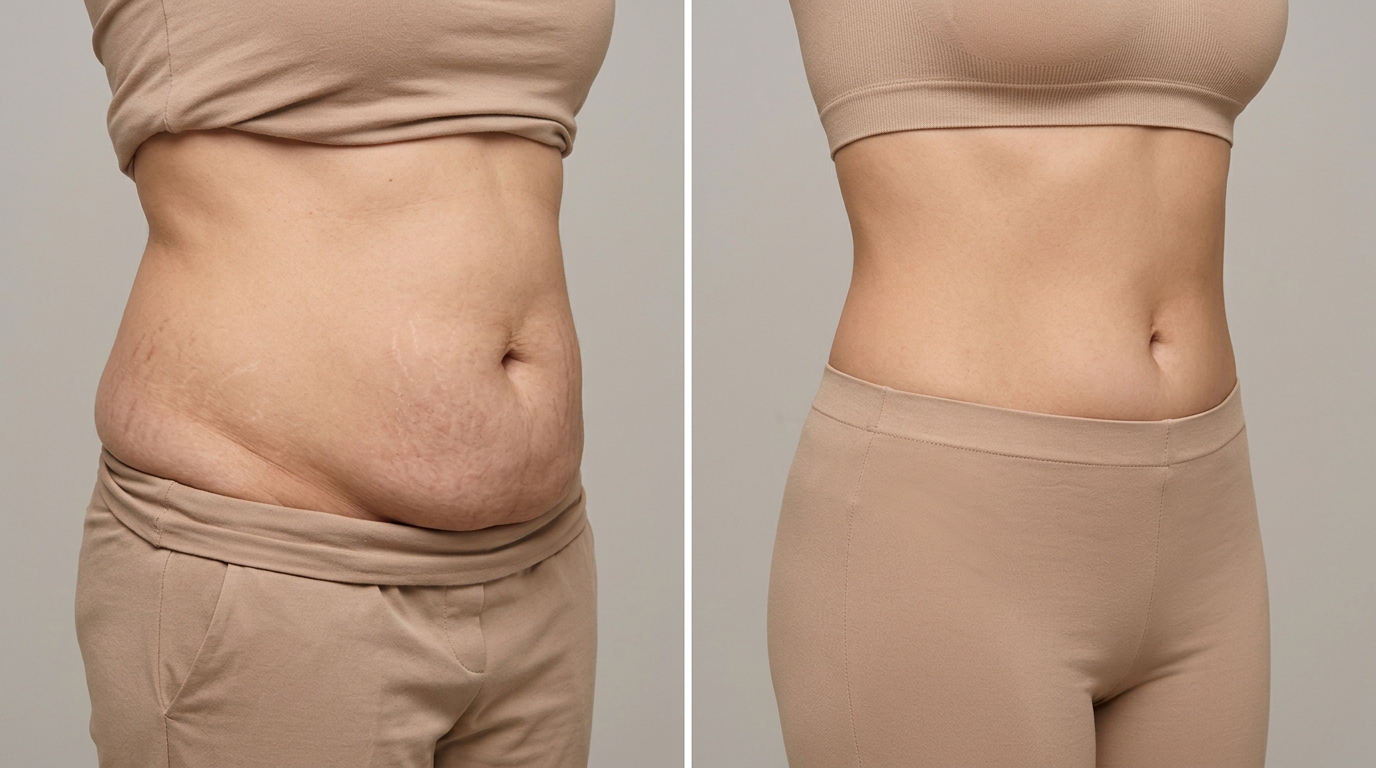
Circumferential Liposuction and Abdominoplasty: Results of Comprehensive Body Contouring
Combining liposuction, fat grafting, and abdominoplasty allows the surgeon to address several aspects of body contouring, remove localized fat deposits, and create more harmonious body proportions.
Watch the video showcasing the results achieved by our specialists:
An individualized treatment plan is developed by the plastic surgeon according to the patient’s body structure, health status, and aesthetic preferences.
The Synergistic Effect: Why Combine Procedures?
Combining liposuction, fat grafting, and abdominoplasty within a single surgical plan allows the surgeon to address body contours comprehensively. Whether all procedures can be performed during one operation depends on the patient’s health, the extent of the planned surgery, and the associated risks.
- Efficient use of harvested fat: Fat removed from the abdomen and flanks during liposuction may be processed and used for grafting into the buttocks or other suitable areas.
- More defined waist contours: Isolated abdominoplasty removes excess abdominal skin but may not adequately address fat deposits along the flanks and lower back. Liposuction can complement the results when appropriate.
- A shared recovery period: When medically appropriate, combining procedures allows patients to undergo one surgical session. However, combined surgery may increase operative time and complication risks, making it unsuitable for some patients.
- Comprehensive silhouette enhancement: Combining techniques allows several anatomical areas to be addressed and may help create more balanced body proportions.
The Psychological Aspect and Patients’ Quality of Life
Changes in body contours following pregnancy, significant weight fluctuations, or aging may affect not only physical comfort but also emotional well-being. Some patients experience reduced self-confidence or feel uncomfortable choosing certain clothes or visiting beaches and swimming pools.
Comprehensive body contouring and abdominoplasty may help patients achieve their desired aesthetic changes and improve satisfaction with their appearance. However, outcomes vary, and surgery does not replace the importance of maintaining physical and psychological well-being.
Preparing for Surgery and Selecting Suitable Candidates
The success of comprehensive surgical body contouring depends largely on appropriate preparation and a thorough assessment of the patient’s health. Given the extent of the intervention, the surgeon and anesthesiologist carefully evaluate the indications, contraindications, and individual risks.
Candidate Selection Criteria
- Body weight has remained stable over the preceding several months.
- Body mass index (BMI) and overall health are compatible with the planned procedure and its associated risks.
- There are no serious medical conditions that could significantly increase surgical risk or complicate recovery, or existing conditions are appropriately controlled.
- The patient has realistic expectations regarding the potential results of surgery.
- The patient is prepared to follow postoperative instructions and attend follow-up appointments.
Preoperative Assessment
Before surgery, the patient undergoes a medical evaluation, the extent of which is determined individually by the treating physician. It may include:
- Laboratory tests: Complete blood count, blood chemistry tests, coagulation studies, infection screening when indicated, blood group and Rh factor determination, and urinalysis.
- Instrumental investigations: Electrocardiography (ECG) and other tests as medically indicated. Ultrasound examination of the lower-extremity veins and additional investigations may be recommended when necessary.
- Specialist consultations: Assessments by an internist and anesthesiologist, and, when necessary, an endocrinologist, phlebologist, cardiologist, or other specialists.
Patients are generally advised to stop smoking and avoid alcohol for the period specified by their physician. Nicotine can impair blood circulation in tissues and delay wound healing. Medications that affect blood clotting, as well as vitamins and dietary supplements, should be discussed with the treating physician. Prescribed medications should not be discontinued without medical advice.
The Surgical Procedure and Anesthesia
Comprehensive body contouring is generally performed under general anesthesia. Throughout the procedure, the anesthesiology team monitors the patient’s vital signs using appropriate medical equipment.
The duration of combined surgery depends on the amount of fat removed, the extent of skin correction, and whether fat grafting is performed. A surgical plan may include the following steps:
- Preoperative marking of the donor and recipient areas.
- Administration of a specialized solution and liposuction of the planned treatment areas.
- Processing and preparation of the harvested fat for grafting.
- Performance of abdominoplasty, including removal of excess skin and repair of diastasis when indicated.
- Fat grafting to selected areas, if included in the surgical plan and considered appropriate.
- Closure of incisions, placement of drains when necessary, and use of compression garments according to the surgeon’s instructions.
Recovery After Comprehensive Body Contouring
Recovery after combined body contouring requires time, careful aftercare, and adherence to medical instructions. The recovery period depends on the extent of surgery, individual healing characteristics, and any underlying medical conditions.
1. Early Hospital Recovery
During the first few days after surgery, the patient remains under medical supervision. Pain management and complication-prevention measures are provided as prescribed. Early mobilization, including standing and walking, is introduced gradually according to the patient’s condition and the surgeon’s recommendations. Positioning and the need for surgical drains are determined individually.
2. The First Two Weeks After Discharge
Swelling, bruising, and moderate discomfort may persist during this period but generally improve gradually.
- Wear compression garments according to the surgeon’s instructions.
- Avoid sudden movements, strenuous physical activity, and heavy lifting.
- Follow instructions for dressing changes and postoperative wound care.
- After buttock fat grafting, follow individualized recommendations regarding body positioning, sitting, and sleeping to avoid excessive pressure on the transferred fat.
3. The Subacute Recovery Period: Weeks 3–6
Swelling gradually subsides, tissues become softer, and mobility improves. The timing of the return to work and everyday activities depends on the patient’s recovery and the physical demands of their occupation.
- Follow the surgeon’s prescribed schedule for wearing compression garments.
- Have sutures removed at the recommended time if non-absorbable stitches were used.
- Do not begin massage, physiotherapy, or lymphatic drainage treatments without the surgeon’s approval.
- Avoid baths, saunas, hot tubs, and tanning beds until cleared by the physician.
4. Final Results and Tissue Maturation: 2–12 Months
During this period, residual swelling continues to decrease, tissues adapt, and surgical scars gradually mature. The final outcome is assessed in accordance with the patient’s individual healing process.
- Resume physical exercise gradually and only after receiving clearance from the surgeon.
- Use silicone gels or sheets for scar care if recommended by the physician.
- Discuss additional scar treatment options with the surgeon if necessary.
- Attend follow-up appointments according to the prescribed schedule.
Complication Prevention and Patient Safety
Patient safety is the highest priority during extensive plastic surgery. To reduce the risk of complications, the medical team may implement the following measures:
- Prevention of thromboembolic complications: Individual risk assessment, early mobilization, mechanical compression devices, and medication-based prophylaxis when indicated.
- Infection prevention: Adherence to aseptic and antiseptic protocols, with antibiotics prescribed when medically indicated.
- Prevention and management of seromas and hematomas: Careful control of bleeding, drain placement when necessary, and compliance with postoperative instructions.
Seek urgent medical attention if you experience increasing pain, significant redness, fever, sudden shortness of breath, chest pain, or swelling in one leg.
Maintaining Long-Term Results
The results of comprehensive body contouring may last for many years. However, their long-term stability can be affected by weight fluctuations, the natural aging process, and individual physiological characteristics.
Recommendations for Maintaining Your Results
- Weight stability: Significant weight fluctuations can affect body contours and skin elasticity.
- Balanced nutrition: A diet containing adequate protein, fiber, vitamins, and minerals supports overall health.
- Regular physical activity: Once fully recovered and cleared by the physician, patients can gradually return to exercise, swimming, and other forms of physical activity.
- Skin care: Using moisturizers and following appropriate skin care recommendations can help maintain skin health.
Comparison of Body Contouring Techniques
| Criteria | Liposuction | Fat Grafting | Abdominoplasty |
|---|---|---|---|
| Primary goal | Removal of localized fat deposits | Restoration of volume using the patient’s own fat | Removal of excess skin and correction of diastasis when indicated |
| Effect on the skin | Indirect improvement in body contours | Potential improvement in the contours of selected areas | Direct removal of excess skin |
| Correction of diastasis | No | No | Yes, when included in the surgical plan |
| Postoperative scars | Small marks at the cannula entry points | Small marks at the injection and harvesting sites | Usually a horizontal scar in the lower abdomen |
| Type of anesthesia | Local or general, depending on the extent of surgery | Local or general, depending on the extent of surgery | Usually general anesthesia |
| Recovery time | Varies individually | Varies individually | Varies individually |
Conclusion
Combining liposuction, fat grafting, and abdominoplasty offers a comprehensive approach to body contouring, allowing surgeons to address localized fat deposits, excess skin, and insufficient volume in selected anatomical areas.
When carefully planned, comprehensive body contouring can refine the contours of the torso, improve abdominal shape, and create more harmonious body proportions. The suitability of combining procedures is determined individually following a consultation with a plastic surgeon and a thorough preoperative medical assessment.
The foundation of a successful outcome remains the choice of a qualified plastic surgeon, a thorough assessment of the patient’s health, realistic expectations, and adherence to postoperative recovery recommendations.
“`