

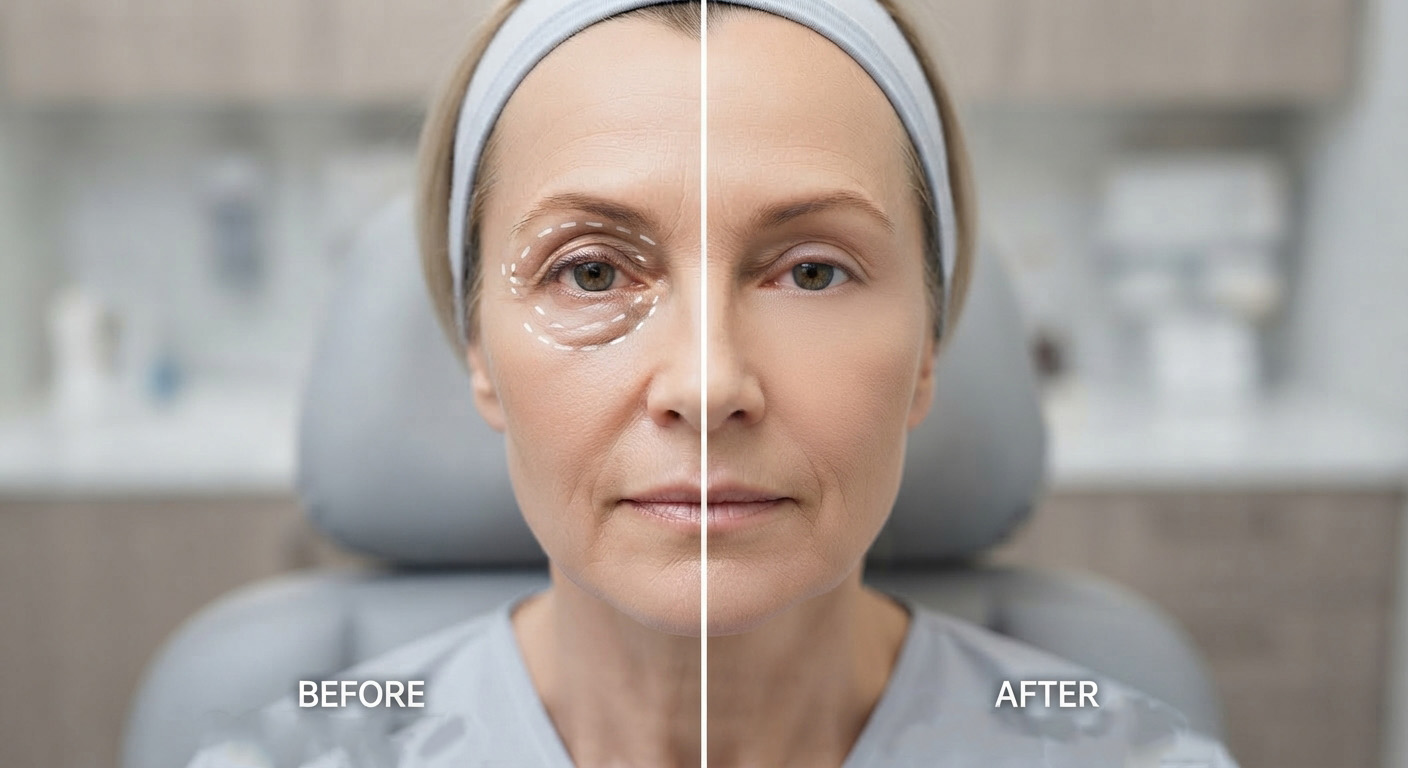
Eyelid Surgery in Yerevan — Blepharoplasty in Yerevan is one of the most sought-after facial plastic surgery procedures. Eyelid surgery makes it possible to correct excess skin, fat pads, and other age-related changes of the upper and lower eyelids, helping the eyes look more open and refreshed.
At the same time, blepharoplasty is not just a “rejuvenation” operation for the eyes. In each case, the surgeon evaluates the anatomical features of the face, skin condition, eyebrow position, prominence of fat bags, characteristics of the lower eyelid, and other factors. Therefore, the surgical plan should always be tailored individually.
In this article, we will examine in detail what eyelid surgery is, what types of blepharoplasty exist, who it is suitable for, how the surgery is performed, how long recovery takes, what restrictions exist, and what to look for when choosing a surgeon in Yerevan.
What is Blepharoplasty?
Blepharoplasty is the surgical correction of the upper and/or lower eyelids. Depending on individual indications, excess adipose tissue may be removed or redistributed during the operation, excess skin excised, and tissues supporting the eyelid corrected.
The primary goal of the operation is to improve the appearance of the eyelids while preserving natural facial proportions.
It is important to understand that blepharoplasty does not always mean removing a large amount of skin or fat. The modern approach involves the most precise correction possible: the surgeon aims to eliminate excess tissue where necessary while preserving natural anatomy.
This is precisely why two patients with similar complaints may receive completely different surgical plans.
Upper Eyelid Surgery
Upper blepharoplasty is performed to correct excess skin and, if necessary, adipose tissue in the upper eyelid area.
With age, the skin gradually loses elasticity, becomes less dense, and upper eyelid tissues may sag. As a result, skin hooding appears, making the eyes look smaller visually.
In some patients, skin excess is pronounced enough to affect not only aesthetics but also peripheral or upper visual fields. In such situations, an additional visual assessment may be required before surgery.
The incision for upper blepharoplasty is usually placed within the natural crease of the eyelid. Thanks to this, the scar in most cases becomes barely noticeable after healing.
What changes can upper blepharoplasty correct?
The surgery can be used to correct:
- excess skin of the upper eyelids;
- pronounced skin hooding;
- local fat protrusions;
- eyelid asymmetry in certain cases;
- age-related changes in the eye area.
However, not every upper eyelid hooding is exclusively related to skin excess. Sometimes, eyebrow position or drooping of the forehead tissues plays a significant role. Therefore, before surgery, it is important to determine the true cause of changes in the appearance of the upper third of the face.
Lower Eyelid Surgery
Lower blepharoplasty is designed to correct the lower eyelid area.
One of the most common reasons for consulting a plastic surgeon is the appearance of so-called “bags under the eyes.” These may be associated with protruding adipose tissue, anatomical features, age-related changes, or a combination of several factors.
Depending on the situation, the surgeon may remove a portion of the adipose tissue or redistribute it to make the transition between the lower eyelid and the cheek smoother.
Under certain indications, a transconjunctival approach is used—the incision is made from the conjunctival side. This option may be suitable for certain patients when the main problem is related to fat pads and there is no significant excess of skin.
If pronounced skin excess is present, an external approach with the incision placed directly beneath the lash line may be required.
The choice of technique is determined not by a desire to use the “most modern method,” but by the anatomical features of the specific patient.
Circumferential (Dual) Blepharoplasty
If changes are present simultaneously on both upper and lower eyelids, circumferential blepharoplasty—a comprehensive correction of both zones—can be performed.
This option allows for working with both upper and lower eyelids within a single surgical intervention.
Circumferential blepharoplasty may be relevant for patients who experience:
- excess skin of the upper eyelids;
- pronounced fat protrusions under the eyes;
- age-related changes in the upper and lower periorbital area;
- a visually tired look;
- a combination of several aesthetic issues around the eyes.
At the same time, circumferential blepharoplasty does not mean using the same technique for each eye or the same volume of tissue removal. The surgical plan is formed individually.
At what age can blepharoplasty be performed?
There is no universal age for the surgery.
In some people, anatomical features of the eyelids become noticeable at a relatively young age. Others seek eyelid surgery much later, when pronounced age-related changes appear.
Therefore, the primary criterion is not a specific number in the passport, but the presence of indications, overall health status, tissue condition, and realistic patient expectations.
Before surgery, the surgeon evaluates the eye area and determines whether blepharoplasty will genuinely solve the problem.
For example, if the main cause of a heavy look lies in drooping eyebrows, eyelid surgery alone may not yield the expected result. In some cases, a combination of procedures may be discussed.
What problems does blepharoplasty not solve?
Despite the broad capabilities of the surgery, blepharoplasty is not a universal method for rejuvenating the entire facial area.
It is not intended directly to eliminate:
- pronounced forehead wrinkles;
- drooping of the mid-face;
- deep tear troughs in all cases;
- all types of dark circles under the eyes;
- age-related changes of the cheeks.
For example, dark circles may be caused by pigmentation, vascular features, thin skin, or anatomical shadows. Removing excess skin or fat will not necessarily eliminate the cause of such changes.
Therefore, during the consultation, it is important to describe in detail to the doctor what exact result you wish to achieve.
How does the consultation before blepharoplasty proceed?
The consultation is a crucial part of preparation for eyelid surgery.
The surgeon evaluates:
- skin condition;
- amount and location of adipose tissue;
- degree of skin excess;
- eye symmetry;
- eyebrow position;
- lower eyelid condition;
- characteristics of the punctum and lacrimal outflow;
- orbit anatomy;
- presence of previous surgeries or injuries.
The doctor also clarifies information regarding health status, medications taken, allergic reactions, and other factors that may be important for the surgery.
If the patient wears contact lenses, has eye diseases, or regularly uses certain medications, this must be reported to the doctor.
What tests are needed before surgery?
The list of preoperative examinations depends on the patient’s health status, age, type of surgery, and requirements of the specific clinic.
Usually, the following may be prescribed before surgical intervention:
- complete blood count;
- blood clotting studies;
- biochemical parameters;
- electrocardiogram;
- other examinations according to medical indications.
If the patient has chronic diseases or takes regular medications, the surgeon and anesthesiologist may prescribe additional tests.
It is important not to rely solely on lists of tests found on the internet. The final list should be determined by the medical team responsible for performing the surgery.
How is the surgery performed?
Blepharoplasty is performed in an operating room and may be carried out under local anesthesia with supplementary sedation or under general anesthesia—depending on the scope of intervention, chosen technique, and medical indications.
During the operation, the surgeon performs markings, makes necessary incisions, and corrects tissues in accordance with a pre-determined plan.
In upper blepharoplasty, the incision is usually hidden in the natural crease of the upper eyelid.
In lower blepharoplasty, the approach is chosen individually. In some cases, surgery can be performed through the conjunctiva, while the presence of skin excess may require an external incision.
The duration of the surgery depends on the scope of intervention. Correction of only the upper eyelids usually takes less time than a combined operation on both upper and lower eyelids.
Does blepharoplasty hurt?
During the surgery, the patient should not experience pronounced pain thanks to the chosen type of anesthesia.
After the surgical intervention, the following may occur:
- a sensation of tightness;
- moderate soreness;
- swelling;
- bruising;
- increased sensitivity;
- a feeling of dryness or grittiness in the eyes.
The intensity of these symptoms is individual.
If necessary, the doctor prescribes painkillers and other medications for a comfortable recovery.
Recovery after blepharoplasty
Rehabilitation after blepharoplasty proceeds gradually.
In the first days, swelling and bruising around the eyes may be most noticeable. They typically decrease gradually as tissues heal.
The doctor may recommend cold compresses in the first days, sleeping with the head elevated, and limiting physical activity.
After surgery, it is essential to follow all individual recommendations given by the surgeon.
During the first weeks, it is especially important to treat the eye area with care and avoid activities that may increase the risk of bleeding or worsen swelling.
What is usually restricted after surgery?
During the recovery period, the doctor may recommend temporarily refraining from:
- intense physical workouts;
- heavy physical exertion;
- visiting saunas and steam baths;
- swimming pools;
- prolonged exposure to direct sunlight;
- alcohol consumption for the period established by the doctor;
- wearing decorative cosmetics until permitted by the specialist.
Specific timelines depend on the surgical technique and individual healing process.
When can I return to work?
The timeframe for returning to work depends on your profession and individual recovery.
If your work does not involve physical exertion, many patients plan a few days or about a week for initial recovery. However, bruising and swelling may persist longer.
If your job requires constant interaction with people or being on camera, you should keep in mind that external signs of surgery may be noticeable for several weeks.
Therefore, it is advisable to plan the surgery date taking into account important events, trips, and professional responsibilities.
When will the final result be visible?
After blepharoplasty, appearance changes gradually.
Initial results can be seen after the main swelling subsides, but final evaluation of the result requires more time.
Soft tissues continue to recover, and scars gradually become less noticeable.
Therefore, you should not evaluate the result a few days after surgery or draw conclusions about the final outcome based on photographs from the early postoperative period.
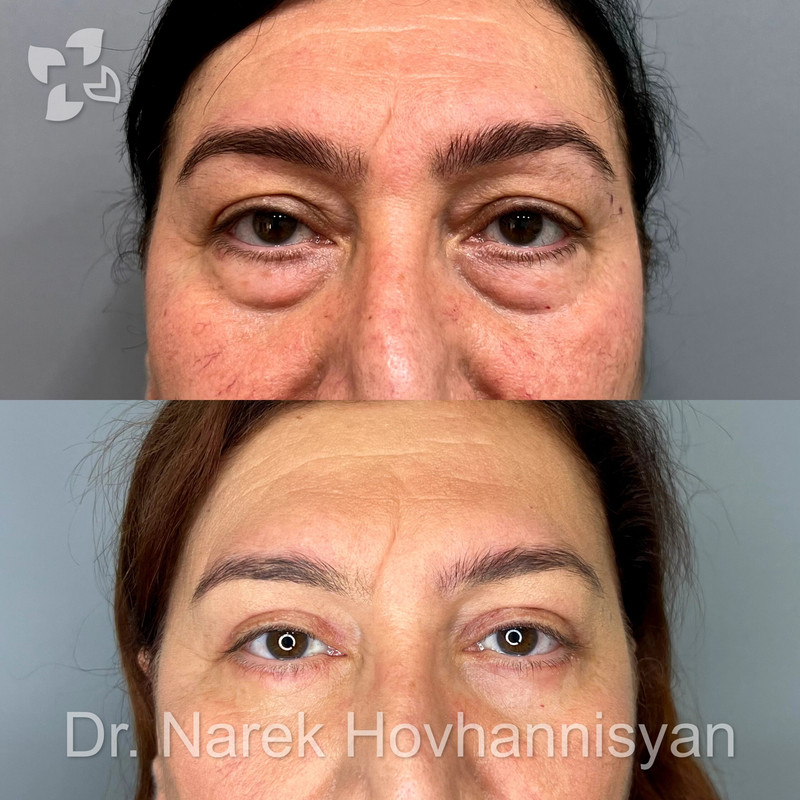
Real result of blepharoplasty: the photo shows the patient’s results before and after surgery. Blepharoplasty makes it possible to correct excess skin and adipose tissue in the eyelid area, giving the look a fresher and more open appearance. The result is individual for each patient.
Do scars remain after blepharoplasty?
Any surgical incision forms a scar. However, with proper choice of approach, the scar after blepharoplasty is located in an anatomically natural zone.
After upper blepharoplasty, it is usually hidden in the upper eyelid crease.
After external lower blepharoplasty, the incision line is located close to the lash line.
Over time, scars typically become lighter and less noticeable.
The rate of scar maturation depends on the individual characteristics of the body, care, and adherence to medical recommendations.
Potential risks and complications
Like any surgical intervention, blepharoplasty carries potential risks.
These may include:
- bleeding or hematoma formation;
- infectious complications;
- pronounced swelling;
- temporary dry eyes;
- eye irritation;
- asymmetry;
- changes in eyelid position;
- scar visibility;
- need for additional correction;
- other complications associated with surgery or anesthesia.
In lower blepharoplasty, proper evaluation of the lower eyelid condition and its supporting structures is of particular importance. Therefore, choosing a surgeon experienced specifically in periorbital surgery matters greatly.
How to choose a surgeon for Eyelid Surgery in Yerevan?
If you are planning eyelid surgery in Yerevan, you should not choose a specialist based solely on the cost of the operation.
When choosing a surgeon, you should pay attention to several factors.
1. Specialization
Verify the doctor’s education, qualifications, and experience in performing facial and eyelid plastic surgery.
2. Before and after photos
It is helpful to study the surgeon’s real results. At the same time, it is important to pay attention not to a single successful example, but to a large portfolio of work.
It is advisable to view photographs of patients with similar anatomy and comparable initial data.
3. Individual approach
A good surgeon should not offer the exact same operation to every patient.
Upper, lower, and circumferential blepharoplasty can differ significantly in technique and scope.
4. Discussion of risks
During the consultation, the patient should receive information not only about the benefits of the surgery but also understand potential limitations and complications.
5. Postoperative care
It is important to find out in advance who will monitor the patient after surgery, when follow-up examinations take place, and where to turn if questions arise.
How much does eyelid surgery cost in Yerevan?
The price of blepharoplasty in Yerevan depends on many factors.
Cost may be influenced by:
- upper or lower blepharoplasty;
- need for correction of both eyelids;
- complexity of the operation;
- chosen surgical technique;
- type of anesthesia;
- length of stay in the clinic;
- preoperative examinations;
- postoperative monitoring;
- need for combination with other procedures.
Therefore, the correct cost cannot be determined solely by the name of the operation.
For example, the price of upper eyelid surgery and the cost of comprehensive correction of both upper and lower eyelids can differ significantly.
When contacting a clinic, it is advisable to clarify what exactly is included in the stated cost.
Why do patients choose Yerevan for plastic surgery?
Yerevan is one of the destinations considered by patients interested in medical tourism.
For international patients, not only the cost of surgery matters, but also the qualifications of the surgeon, the quality of medical infrastructure, organization of transfer, accommodation, translation, and postoperative support.
When choosing treatment abroad, it is necessary to consider the full range of services rather than comparing solely the price of the surgical intervention.
For a patient arriving in Armenia from another country, it is especially important to arrange a consultation in advance, determine the necessary scope of examinations, and agree upon the length of stay.
Blepharoplasty and medical tourism in Yerevan
If a patient travels from another country for surgery, the process generally includes several stages.
First, the patient provides medical information and photographs for preliminary assessment. Afterward, the doctor determines whether an in-person consultation is needed and what examinations will be required.
Upon agreeing on the surgical plan, the patient arrives in Yerevan, undergoes the necessary examinations, and meets with the surgeon.
Postoperative monitoring is conducted following the surgery.
When planning the trip, it must be considered that returning home immediately after surgery may be undesirable. The duration of stay in Yerevan should be determined jointly with the doctor, taking into account the scope of surgery and the patient’s condition.
Can blepharoplasty be combined with other surgeries?
In some cases, eyelid surgery is performed simultaneously with other aesthetic procedures.
For example, a patient may be advised to combine blepharoplasty with brow correction, facelift, or other interventions.
However, increasing the number of procedures simultaneously is not always an advantage. The larger the scope of surgical intervention, the more important it is to evaluate the patient’s overall health, duration of surgery, and potential risks.
The decision to combine procedures is made by the surgeon after an in-person evaluation.
Frequently asked questions about blepharoplasty
Can I do only the upper eyelids?
Yes. If changes are present predominantly in the upper eyelid area, the surgery can be limited to this zone.
Can I do only the lower eyelids?
Yes. Lower blepharoplasty can be performed separately when appropriate indications are present.
Is it necessary to remove fat under the eyes?
Not always. Modern techniques involve not only removal but also redistribution of adipose tissue. The decision depends on the patient’s anatomy.
Can dark circles be removed with blepharoplasty?
Not always. The cause of dark circles may be related to factors other than excess skin or fat, so blepharoplasty may not eliminate this problem completely.
Will the shape of the eyes change?
The main goal of standard blepharoplasty is the correction of tissue excess rather than altering the natural shape of the eyes. However, specific aspects of the surgery should be discussed with the surgeon in advance.
Can I wear glasses after surgery?
In most cases, glasses can be worn, but specific recommendations depend on the nature of the intervention and postoperative condition.
When can I use makeup?
The timeline depends on the healing process. Returning to decorative cosmetics should only occur after permission from the surgeon.
When can I exercise?
Intense physical exertion is temporarily restricted. The timeframe for returning to workouts is determined by the doctor.
What is important to know before deciding on surgery?
Blepharoplasty can significantly change the appearance of the eye area, but it remains a surgical intervention rather than a cosmetic procedure in the usual sense.
Before surgery, it is important to have realistic expectations.
The goal of skillful correction is not necessarily to make the eyes as open as possible or completely eliminate all wrinkles. It is more important to preserve natural anatomy and achieve a harmonious result.
It is also necessary to understand that facial symmetry in nature is not absolute. Minor differences between the eyes may persist even after surgery.
This is precisely why during the consultation, it is worth discussing the desired outcome and potential limitations in detail with the surgeon.
Blepharoplasty in Yerevan: how to prepare for surgery
If you are considering eyelid surgery in Yerevan, the preparation process can be roughly divided into several stages:
- Consultation. The problem and possible scope of surgery are determined.
- Diagnostics. Tests and additional examinations are prescribed if necessary.
- Planning. The surgical technique and type of anesthesia are chosen.
- Preparation for surgery. The patient receives individual recommendations regarding diet, medications, and lifestyle.
- Surgery. Surgical correction of the eyelids is performed.
- Postoperative monitoring. The doctor monitors the healing process and provides rehabilitation recommendations.
- Follow-up examinations. Recovery dynamics and the formation of the final result are evaluated.
Conclusion
Blepharoplasty in Yerevan can be an effective way to correct excess skin and adipose tissue in the eyelid area and improve the appearance of the periorbital zone. However, there is no universal technique suitable for every patient.
Upper, lower, and circumferential blepharoplasty differ in indications, surgical approaches, and scope of intervention. In some cases, the transconjunctival technique may be used, while at other times correction of the skin position and tissues of the lower eyelid is required.
Before surgery, it is necessary to undergo a consultation with a plastic surgeon, discuss the desired outcome, learn about potential risks, and receive an individual preparation and recovery plan.
If you are considering eyelid surgery in Yerevan, when choosing a clinic and surgeon, it is recommended to pay attention not only to the price, but also to the specialist’s qualifications, experience in performing such operations, real results, surgical conditions, and quality of postoperative monitoring.
A properly structured treatment plan begins with an in-person consultation and a detailed assessment of the patient’s anatomy. It is this individual approach that allows for determining which blepharoplasty technique suits a specific person and what result can be expected.