

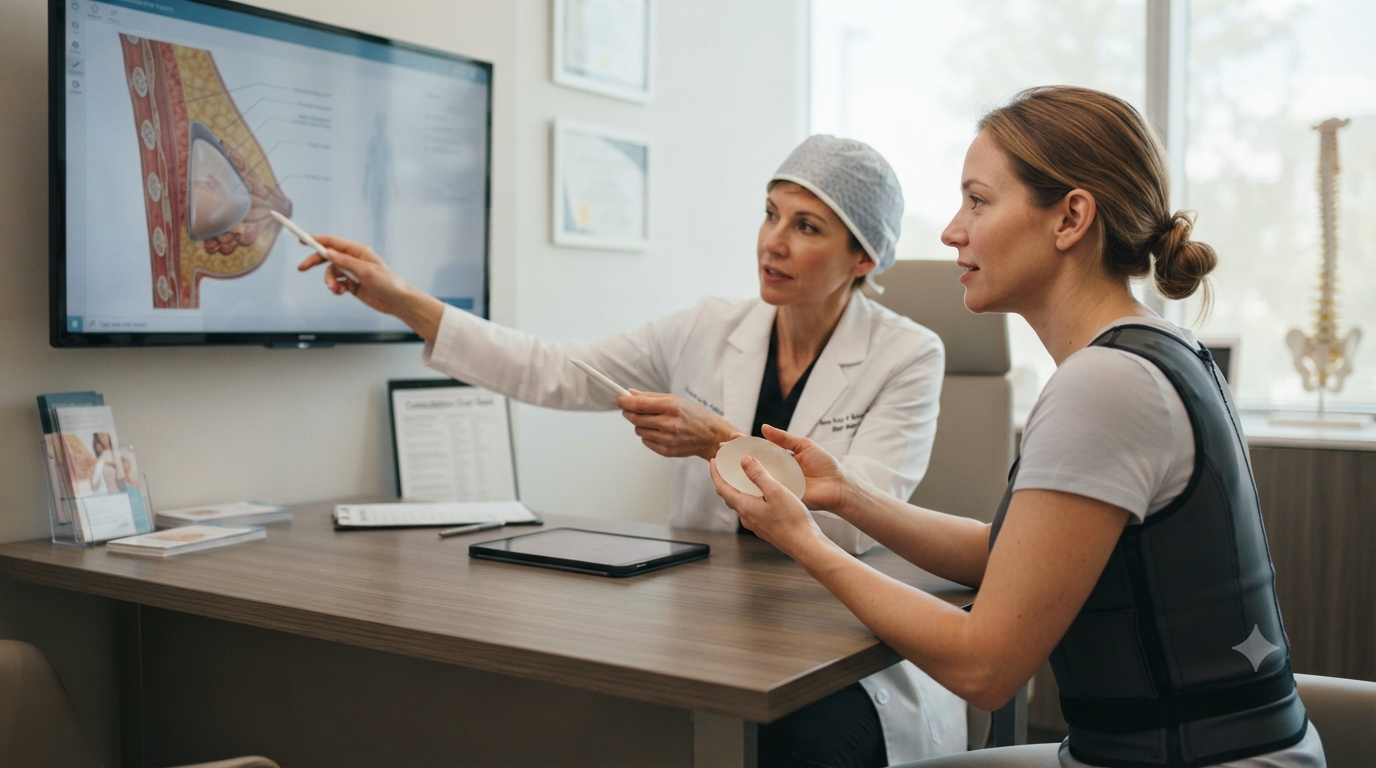
Breast Augmentation — A Modern Approach to Harmonious Proportions
Breast augmentation has remained one of the most sought-after surgeries in aesthetic surgery for many years. According to international professional associations of plastic surgeons, mammoplasty is consistently among the most frequently performed aesthetic procedures worldwide. Modern technologies, safe materials, and refined surgical techniques allow for maximally natural results while preserving each patient’s individuality.
For many women, breast surgery is not just about changing one’s appearance. It helps restore self-confidence, reclaim breast shape lost after pregnancy or weight loss, correct congenital asymmetry, or complete reconstruction following medical conditions. Modern operations are not aimed at creating artificially large busts, but rather at achieving harmonious body proportions and a natural appearance.

Despite the procedure’s popularity, many myths still surround it. Some women fear complications, others believe implants always look unnatural, and some are convinced that they will have to give up sports or breastfeeding after the surgery. Most of these fears are based on outdated information and do not reflect the current standard of plastic surgery.
In this comprehensive guide, we will explain what breast augmentation entails, who mammoplasty is suitable for, the types of implants available, how the surgery is performed, how long recovery lasts, and what to look for when choosing a plastic surgeon.
What is Mammoplasty?
Mammoplasty is the general term for surgical operations aimed at changing the shape, size, or position of the mammary glands. Depending on the patient’s goals, there are several types of mammoplasty:
- Breast augmentation (augmentation mammoplasty);
- Breast reduction (reduction mammoplasty);
- Breast lift (mastopexy);
- Reconstructive mammoplasty following trauma or oncological diseases.
This article focuses specifically on breast augmentation—a surgery in which the volume of the mammary glands is increased using silicone implants or, in some cases, the patient’s own fat (lipofilling).
Today, breast augmentation with implants is considered the “gold standard” because it provides a predictable, durable, and aesthetic result.
Why do women choose to undergo breast augmentation?
The reasons for consulting a plastic surgeon are always individual. For one woman, it is an opportunity to restore breast shape after childbirth; for another, a way to correct congenital features; and for others, a desire to feel more confident.
The most common reasons include:
- Naturally small breast volume;
- Pronounced asymmetry of the mammary glands;
- Loss of volume after pregnancy and breastfeeding;
- Age-related tissue changes;
- Consequences of significant weight loss;
- Desire to improve body proportions;
- Reconstruction after trauma or surgical treatment.
It is important to understand that modern aesthetic surgery does not seek to impose a single standard of beauty. The main goal is to highlight individuality and help the patient achieve a result that aligns with her expectations and anatomical features.
Who is a candidate for breast augmentation surgery?
The best candidates for breast augmentation surgery are women in good general health, whose breast development is complete, and who have no contraindications to surgical intervention.
Before the surgery, the plastic surgeon assesses:
- The patient’s age;
- Skin condition;
- Volume of existing tissue;
- Chest shape;
- Position of the nipple-areola complex;
- Presence of asymmetry;
- Lifestyle habits;
- Plans regarding future pregnancy and breastfeeding;
- Desired breast size.
During the consultation, it is important to openly discuss your expectations. A good surgeon will always explain what result is realistic for your specific case and help you select the optimal solution.
What types of implants are used in breast augmentation?
Modern breast implants differ significantly from those used several decades ago. They undergo strict quality control, possess high durability, and are designed to mimic the natural tissue of the mammary gland as closely as possible.
By Shape
Round Breast Implants
Round implants provide more pronounced volume in the upper pole of the breast and create a “filled” décolleté effect. They are suitable for patients who desire a noticeable increase in volume and a more defined breast contour.
Anatomical (Teardrop) Implants
Anatomical implants replicate the natural shape of the mammary gland and allow for a maximally natural result. They are particularly popular among women with a small initial breast volume or those who have experienced significant tissue loss.
By Profile
The profile determines how much the implant projects forward.
Available profiles include:
- Low profile;
- Moderate profile;
- High profile;
- Ultra-high profile.
The choice depends on the width of the chest, body structure, and the desired result.
By Surface Texture
Modern breast implants may have:
- A smooth surface;
- A micro- or nano-textured surface;
- A textured shell.
Each option has its unique features, so the choice is always made in consultation with the surgeon.
By Filling Material
Virtually all modern breast implants are filled with highly cohesive silicone gel.
Its advantages include:
- Maintains its shape;
- Has a natural density;
- Does not leak if the shell is damaged;
- Is highly durable.
It is thanks to these characteristics that modern implants provide natural tactile sensations and a beautiful appearance.
How to choose the size when planning breast augmentation?
One of the most important questions before breast augmentation is choosing the future volume.
Many patients come in with a desire to increase their breast size by “two cup sizes,” but a professional approach requires more careful planning.
Factors taken into account include:
- Height;
- Weight;
- Chest width;
- Volume of own tissues;
- Thickness of subcutaneous fat;
- Skin elasticity;
- Body proportions;
- Sporting activity;
- Lifestyle.
Modern clinics often use special sizers and 3D visualization technologies, which allow for a preview of the potential result. This helps avoid unrealistic expectations and select implants that will look natural and harmonious.
How to prepare for a breast augmentation procedure?
Preparation begins a few weeks before the surgery.
Typically, the doctor will prescribe:
- Complete blood count (CBC);
- Blood chemistry panel;
- Coagulation profile;
- Infection screening;
- Urinalysis;
- Electrocardiogram (ECG);
- Consultation with a general practitioner;
- Breast ultrasound or mammography (depending on age and indications).
A few weeks before surgery, it may be recommended to quit smoking, limit alcohol consumption, and temporarily stop taking certain medications that affect blood clotting.
Precise recommendations are determined individually and must be strictly followed according to the doctor’s instructions.
How is breast augmentation surgery performed?
On the day of the surgery, the patient arrives at the clinic in advance for a final consultation with the surgeon and anesthesiologist.
After preparation, the surgeon performs marking, which helps precisely determine the location of the future incisions and implant placement.
The surgery is performed under general anesthesia and usually lasts from one to two hours.
The main stages of the intervention include:
- Making the incision.
- Creating the implant pocket.
- Inserting the selected implant.
- Checking symmetry.
- Closing with cosmetic sutures.
- Putting on compression garments.
After the surgery is complete, the patient is transferred to a recovery room under the observation of medical staff. In most cases, discharge is possible the next day.
Surgical Access Options
During mammoplasty, the plastic surgeon chooses the most suitable method for implant insertion.
Inframammary Access
The incision is made in the natural crease under the breast.
This is the most common option due to the excellent view of the surgical field, high precision of implant placement, and the ability to hide the scar in the natural fold.
Periareolar Access
The incision follows the border of the areola, which allows the scar to become less noticeable over time. This method is not suitable for all patients and is applied based on specific indications.
Axillary Access
The incision is made in the armpit area, ensuring there are no visible scars on the breast itself. However, this technique requires high surgical skill and is not suitable in all clinical situations.
Where are implants placed during breast augmentation?
There are several options for implant placement:
- Under the breast tissue (subglandular);
- Under the pectoralis major muscle (submuscular);
- Using the Dual Plane technique.
The Dual Plane method is considered one of the most popular in modern plastic surgery. It combines the advantages of both placement methods, allowing for a natural breast contour while maintaining reliable support for the implant.
The correct choice of technique is determined solely by the patient’s anatomical features and the surgeon’s recommendations.
Rehabilitation after breast augmentation: what to expect?
Rehabilitation after mammoplasty is one of the most important stages on the path to a beautiful and lasting result. Even a perfectly performed operation requires time for tissue healing and for the body to adapt to the changes.
Recovery speed is individual and depends on body characteristics, the chosen surgical technique, the extent of the surgery, and adherence to the plastic surgeon’s recommendations.
It is important to understand that the final result cannot be assessed immediately after the surgery. In the first few weeks, the breasts will look different due to swelling, and implants require time to settle into their natural position.
The first 24 hours after mammoplasty
Immediately after the surgery, the patient remains under the observation of medical staff.
In the first hours, you may experience:
- A feeling of pressure in the chest area;
- Moderate soreness;
- Drowsiness from anesthesia;
- A feeling of skin tightness;
- Mild swelling.
These symptoms are a normal reaction to surgical intervention.
To control pain, the doctor prescribes painkillers, thanks to which most patients feel quite comfortable within the first day.
Generally, in the absence of complications, discharge occurs the next day.
The first week of recovery
During the first week, the body is actively recovering.
During this period, it is recommended to:
- Get plenty of rest;
- Avoid sharp or sudden arm movements;
- Do not lift heavy objects;
- Do not sleep on your side or stomach;
- Wear compression garments 24/7;
- Strictly follow the doctor’s instructions.
Minor bruising and swelling are considered normal.
It is important to remember that the left and right breasts may recover at different rates. Slight temporary asymmetry in the early postoperative period is usually not a cause for concern.
Weeks two through four
Most patients return to their usual routine and work, provided it does not involve heavy physical exertion.
During this period:
- Swelling decreases;
- Tissue sensitivity diminishes;
- The feeling of tightness disappears;
- The breasts become softer.
However, active workouts, running, heavy lifting, and exercises targeting chest muscles remain prohibited.
One to three months post-op
This is the period when most patients begin to see a result that is very close to the final one.
The implants gradually settle into the correct position, tissues adapt, and the breasts acquire a more natural shape and softness.
The doctor gradually lifts physical activity restrictions, though the timeline is always determined individually.
When can the final result of breast augmentation be assessed?
The final result of breast augmentation is usually assessed 6–12 months after the surgery.
During this time:
- Swelling completely disappears;
- Scars become less noticeable;
- Tissues finalize their adaptation;
- Implants take on a stable position.
This is why you should not draw conclusions about the result in the first weeks after surgery.
Why is a compression garment so important?
After breast augmentation surgery, the plastic surgeon will strongly recommend wearing a special compression garment.
It serves several important functions:
- Supports the breasts;
- Reduces postoperative swelling;
- Promotes proper implant positioning;
- Reduces tension on the stitches;
- Lowers the risk of certain complications;
- Helps tissues adapt faster.
The duration of wear is determined by the surgeon and depends on your recovery progress.
Potential complications after mammoplasty
Despite the high safety level of modern plastic surgery, risks cannot be entirely eliminated.
Like any surgical intervention, breast augmentation can be accompanied by certain complications.
These include:
- Bleeding;
- Seroma formation;
- Infectious complications;
- Altered nipple sensitivity;
- Implant displacement;
- Capsular contracture;
- Implant rupture (rare);
- The need for a revision surgery.
Most complications are rare, especially if the operation is performed by an experienced surgeon using high-quality implants, and the patient follows recovery recommendations.
What is capsular contracture?
One of the most well-known complications is capsular contracture.
After the insertion of any implant, the body naturally forms a thin connective tissue capsule around it. This is a normal physiological reaction.
However, in rare cases, the capsule becomes too dense and begins to compress the implant. This may be accompanied by:
- A sensation of breast firmness;
- Change in shape;
- Discomfort;
- Pain.
Modern surgical techniques and high-quality implants have significantly reduced the likelihood of developing this complication.
Can you breastfeed after breast augmentation?
This is one of the most frequent questions during a consultation.
In most cases, breast augmentation with implants does not affect a woman’s ability to breastfeed.
If the milk ducts and glandular tissue are not damaged during surgery, breastfeeding remains possible.
However, individual characteristics should be considered, and this issue should be discussed with the plastic surgeon in advance.
Does mammoplasty affect pregnancy?
No.
The presence of implants does not prevent pregnancy and has no negative impact on fetal development.
However, pregnancy and breastfeeding can change breast shape regardless of whether implants are present. Sometimes, after lactation, women choose to have a breast lift or implant replacement to correct their shape.
Can you exercise after breast augmentation?
Yes. After full recovery, most patients return to their usual level of physical activity.
As a rule:
- Light walking is permitted within the first few days;
- Activity can be gradually increased after a few weeks;
- Intense workouts and exercises targeting the upper body are only allowed after the surgeon’s approval.
It is especially important not to rush back into heavy strength training, as excessive strain on chest muscles can interfere with the healing process.
Do implants need to be changed every 10 years?
This is one of the most common myths.
In the past, there was a belief that breast implants had to be replaced every ten years. Modern studies show that this is not a mandatory rule.
If:
- The implant remains intact;
- The patient has no complaints;
- There are no complications;
- Follow-up examination results are normal,
planned replacement is not required.
Revision surgery is performed only if there are medical indications or if the patient desires to change the size or shape of the breasts.
Common Myths About Breast Augmentation
Myth #1. Breasts always look artificial
This is not true.
A natural result depends on the correct choice of implant size, shape, placement, and the surgeon’s professionalism.
Today, many results are so natural that people around you may not even suspect a surgery took place.
Myth #2. Implants can burst on an airplane
Modern breast implants undergo testing for pressure change resistance and are designed for significantly higher loads than those encountered during air travel.
Myth #3. You cannot have an MRI after surgery
This is also not true.
Most modern implants are compatible with magnetic resonance imaging. Before an exam, simply inform the doctor about the presence of implants.
Myth #4. Implants can move around the body
The implant is placed in a pocket specifically formed by the surgeon and cannot “travel” through the body.
Modern safety recommendations for breast implants can be found on the website:
U.S. Food & Drug Administration (FDA)
.
Myth #5. After mammoplasty, the breasts lose sensitivity forever
In the first weeks after surgery, a temporary change in nipple or breast skin sensitivity is possible.
In most cases, sensitivity gradually returns within a few months.
Myth #6. Implants cause breast cancer
As of today, there is no evidence that modern silicone implants cause breast cancer.
However, patients are advised to regularly undergo preventive screenings and check-ups with specialists in accordance with their age and medical recommendations.
How to choose a plastic surgeon for breast augmentation?
The choice of specialist affects not only the aesthetic result but also the safety of the surgery.
When choosing a surgeon, pay attention to:
- Specialized education/credentials;
- Experience in performing mammoplasty;
- “Before and after” photos of their work;
- Patient testimonials/reviews;
- Use of certified implants;
- Availability of a modern operating room;
- The doctor’s transparency in discussing potential risks and limitations.
During the consultation, the surgeon should explain all stages of treatment in detail, answer questions, and help manage realistic expectations.
Frequently Asked Questions
Can I sleep on my side after breast augmentation?
In the first few weeks, it is recommended to sleep on your back. Returning to your usual sleeping position is possible after the doctor’s approval.
Will there be scars?
Any surgical intervention involves the formation of a scar. However, with proper care and modern incision techniques, they become significantly less noticeable over time.
Can I have a mammogram with implants?
Yes. The presence of implants does not preclude mammography or other breast examination methods. It is important to inform the specialist about them in advance.
Can I fly on an airplane?
Yes. After the early postoperative period is complete, air travel is usually not contraindicated unless the attending physician provides other recommendations.
How long does the result last?
In the absence of complications and significant changes in body weight, the result can last for many years. However, natural age-related tissue changes continue regardless of whether you have implants.
Conclusion
Breast augmentation is not just an aesthetic operation, but a comprehensive process that begins with a consultation, continues with thorough preparation, a professionally performed mammoplasty, and ends with a responsible recovery period.
Modern breast surgery allows you not only to increase the volume of the mammary glands but also to restore their shape after pregnancy, breastfeeding, or significant weight loss, correct asymmetry, and improve body proportions. Thanks to advancements in technology, the use of high-quality breast implants, and an individual approach to each patient, the surgery has become significantly safer and more predictable.
If you are considering breast augmentation, it is important not to rely solely on photos on the internet or reviews from acquaintances. The best first step is a consultation with a qualified plastic surgeon, who will assess your anatomical features, help select the appropriate implant size and shape, and provide detailed information about the surgery, potential risks, and the recovery process.
An informed approach, realistic expectations, and adherence to the doctor’s recommendations allow you to achieve a natural, harmonious, and long-lasting result that will meet your wishes and help you feel confident for years to come.
If you are also interested in other plastic surgeries, check out our materials on
rhinoplasty,
breast lift, and
liposuction.